

Avoiding Internet Censorship
Understanding, regaining control, and building freely with ICP
This website has no server. No one can shut it down.

1. The Internet today: simple on the surface, centralized underneath
When you type a website address into your phone or computer, your device does not talk to "the Internet".
It talks to one specific server.
These servers are:
- •owned by companies
- •hosted in data centers
- •controlled by laws, intermediaries, and service providers
If a company, a government, or a hosting provider decides to shut it down, the website disappears.
Even if it is popular. Even if it is legal somewhere else.
This is called centralization.
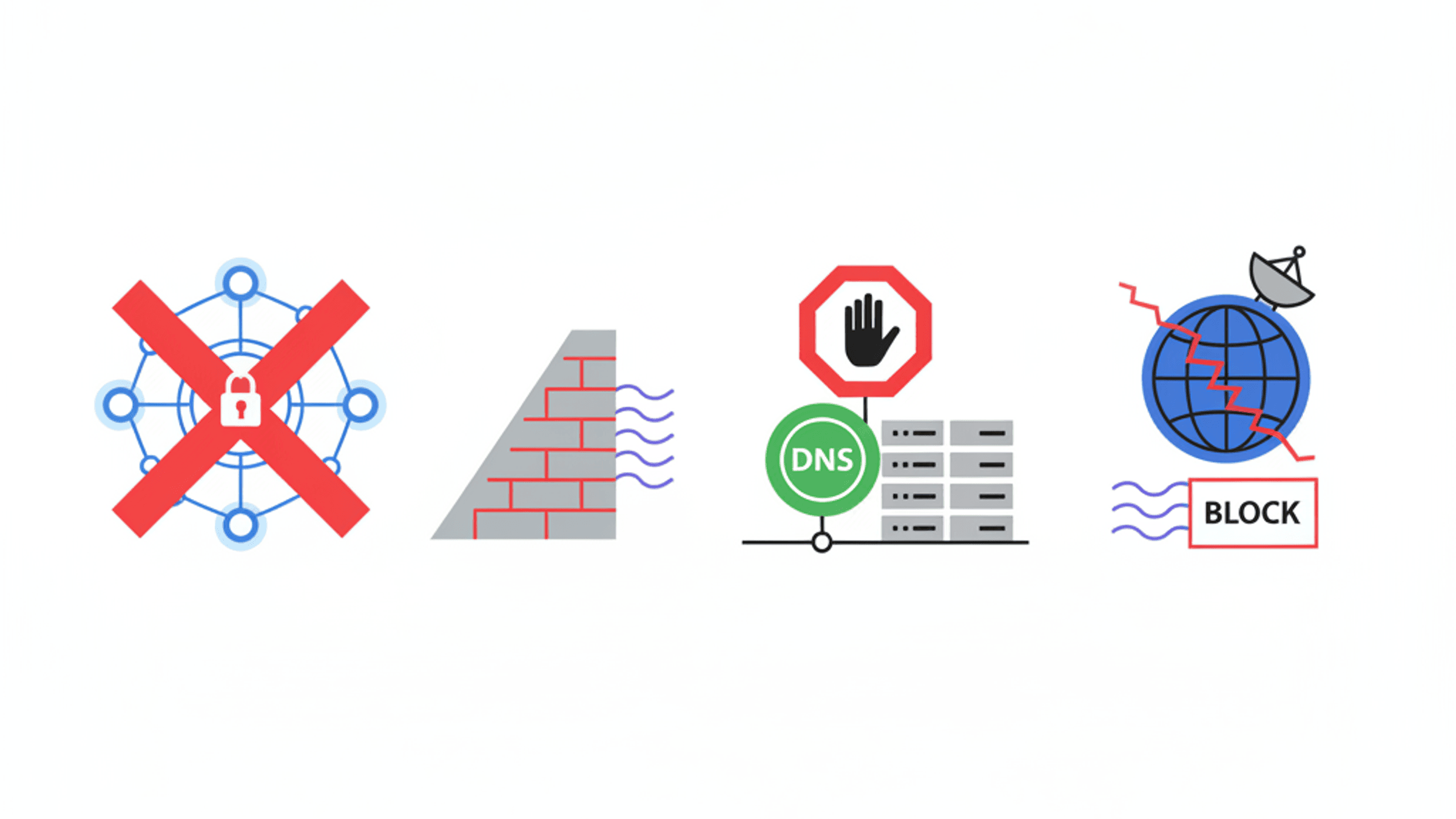
2. How digital censorship really happens
Censorship is not always dramatic.
It often looks boring and technical:
- •a domain name gets removed
- •an app is deleted from an app store
- •a cloud account is closed
- •DNS or IP addresses are blocked
If your website depends on a central actor, it can be censored. It's that simple.

3. What blockchain changed (and what it didn't)
Blockchain introduced a revolutionary idea:
- •no single owner
- •no single server
- •data replicated across a network
But for a long time, blockchains could only:
- •move value
- •store simple data
They could not host real websites or applications.

4. ICP: the Internet running on the blockchain
ICP goes further.
It doesn't just store data. It runs code, hosts websites, and serves web pages directly to users.
That means:
- •no traditional servers
- •no private cloud providers
- •no single point of failure
Your website lives on the blockchain itself.
5. Why ICP is censorship-resistant
Because:
- •the code runs on a decentralized network
- •no single administrator can shut it down
- •there is no central owner
To censor a website running on ICP, you would need to censor the entire network.
In practice, that is extremely difficult.
6. Fast, mobile-friendly, and simple to access
ICP websites are:
- •fast
- •accessible from any browser
- •mobile-friendly
- •independent from traditional backend infrastructure
No heavy servers. No fragile APIs. Just the web, rebuilt differently.

7. Build your own ICP website with Caffeine (no coding required)
This is where things get really interesting.
With Caffeine:
- •you describe what you want in plain language
- •AI builds the website for you
- •it is deployed directly on ICP
No servers. No hosting company. No DevOps.
And yes: this website was built exactly this way.
Conclusion: censorship is solved by architecture
Censorship is not prevented by rules. It is prevented by better architecture.
ICP is not magic.
But it gives people the ability to publish, share, and create without asking permission.
If you can read this, you can build your own website.
And once it's on ICP, no one can make it disappear.